
Selfcare
This past February after returning from the Sonoran desert, I didn’t leave my land for a week. Every day I’d follow my morning routine of yoga, prayers and caring for our land, and every afternoon I’d sit in my medicine circle alongside a stream who flows through our land. First I’d journal and drink tea and then for the next couple of hours I’d drink in the blue sky while noticing flocks of redwinged blackbirds in formation diving into a willow thicket, over and over again.
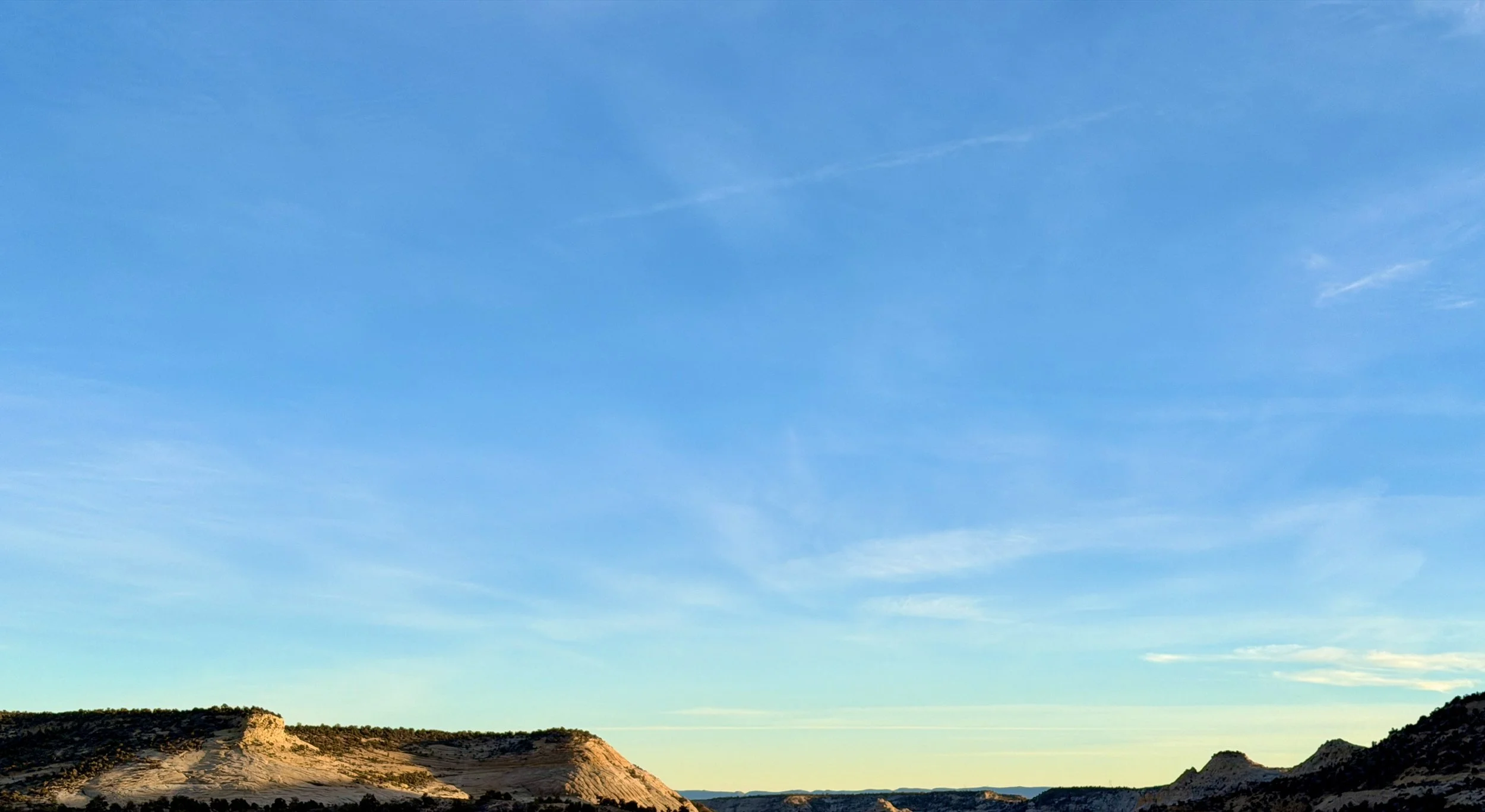
Re-source yourself in Vastness….(photo by Mary McIntyre).
Seeing what I saw while traveling through Arizona on the “Copper Highway/Scenic Route" had me in what I've come to call “the split” described by witnessing (or being aware of) the horrors in our world while continuing with business as usual. To travel past mountains that have been turned into open pit mines while being invited to take in the scenic route revealed the conditioning in our culture to split off from the truth of what our bodies feel. Passing destruction while being invited to see beauty was something that my psyche needed time and space for in order to allow my spirit to catch up with me.
In the last several years talking about trauma, our nervous system, regulation, dysregulation, hypervigilance, fight, flight, flee, freeze, and fawn, as well as anxiety and panic has entered everyday discourse. We're either experiencing trauma or healing from trauma and we can all name the state or our nervous system in any given moment. And Western medicine has the perspective that these reactions and conditions need to be fixed by any means necessary which often means sedating with pharmaceuticals or embarking on endless therapy.
Yet what if we widen the lens on the narrative around our nervous system and trauma and recognize the vital response of our intelligent body to circumstances around us and in our world. While our minds keep adapting to keep up with the technological age our bodies are still primitive with the same design as indigenous peoples who once lived in small tribes or villages in relationship with the land.
In this context feeling empathy, care and love is part of a greater ecological imperative. And by acting on what our hearts feel when seeing another human suffering or issues with land, water, forests, animals, birds…there would be a positive feedback loop of making and noticing that our caring actions matter and make a difference.
With the constant bombardment of news from around the world our hearts are being asked to stretch beyond their capacity and our nervous system rushes in to protect us. From a vitalist health perspective, fight, flight, flee, freeze, etc. are vital responses of our body trying to protect us from what is too much to feel. What happens when we recognize these reactions in ourselves, place a hand on our body and say, “yes, this sensation is here…it’s true I do want to flee….thank you…thank you for protecting me”. ***
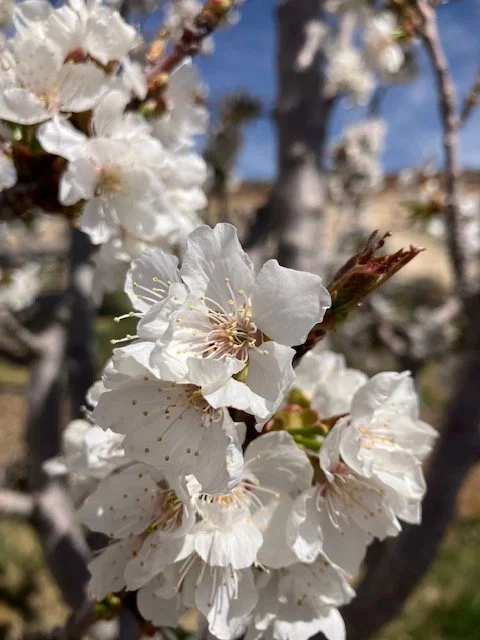
Re-source yourself in Beauty….(photo by Matt Cochran).
How do we care for ourselves in perilous times? Isn’t it selfish to do so? When this last question comes up with a client during a holistic health consultation, I feel a pang in my heart as I know that our culture has conditioned us to believe that selfcare is selfish. Yet how can we care about our friends and families let alone the world when we are emotionally and physically depleted?
For a moment, let go of the words "nervous system" and visualize a wave ebbing and rising. Within ourselves there is a natural wave dynamic that moves between a calm place where we can rest and digest and a heightened state that responds to perceived threats…and this wave dynamic exists within a zone of resiliency. It’s when the wave moves beyond this zone that we can get stuck in hyper-arousal states such as panic or anxiety or hypo-arousal states such as depression and apathy.
“Seeds of resiliency” are practices that nourish our body, heart and soul and support our capacity to ride the natural wave pattern of our nervous system within a zone of resiliency. Water these seeds daily and you will grow a greater capacity to be well resourced for yourself, others and our world:
*unplugging from news and technology for longer and longer periods of time each day;
*nutrition which includes: eating in alignment with your body’s constitution; choosing organic wholefoods and avoiding refined, processed foods; hydration; herbal remedies;
*a daily spiritual or movement practice such as meditation, yoga, tai chi, qigong, dance;
*daily connection with Nature…especially alone and without your phone or earbuds;
*connecting with friends and family;
*a regular sleep protocol;
*re-source in vastness, beauty and mystery;
*tending to what gives you a sense of purpose and meaning within your own community or neighborhood; tend to a garden or plant trees.
In many ways this last seed may be the most important as doing so responds to the natural tendency to care and act within our sphere of influence and this satisfies the needs of our heart and soul to make a difference.
I recently met a man named Chris, from the UK who shared an amazing story of the power of selfcare to make a difference in our world. Within the last few years the practice of breathwork and plunging into cold water as taught by Wim Hof has taken on a significant following. All over the UK people were taking their plunges into rivers and lakes and consequently they were getting sick due to pollutants in the waters. Determined, many individuals approached the government and now there is a movement to clean the waters.
My friend, Foa Kinfyre says, “selfcare is a revolutionary act”. Not only does watering the seeds of resiliency support our individual health and well being, if you follow the trajectory (and Chris’ example) of what the world would look like if we made selfcare a priority, it’s not a stretch to believe that doing so would grow a great turning in the direction of good.
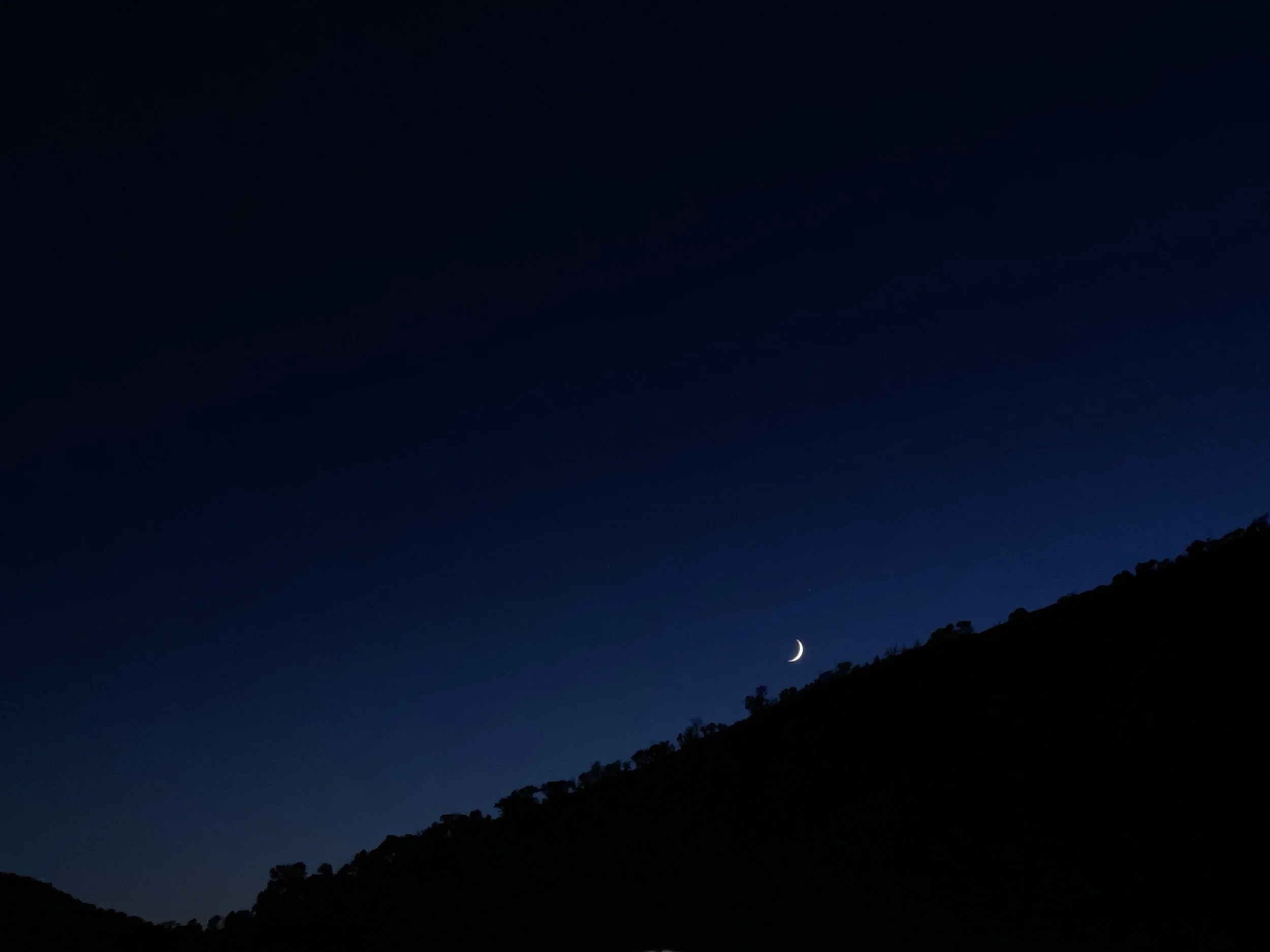
Re-source yourself in Mystery…(photo by Mary McIntyre).
***This is a snippet from an embodied meditation inquiry practice called RAIN and is a way I support individuals in holistic health consultations and mentoring sessions. Here is a brief outline for you to try on your own (as taught by Tara Brach).
RAIN Meditation
Begin with the process by closing your eyes and dropping into your breath and senses…
*Recognize means consciously acknowledging the thoughts, feelings, sensations that are arising and affecting you.
*Allow what’s here to be here…letting the thoughts, emotions, feelings, or sensations simply be here, without trying to fix or avoid anything. Where do you feel this in your body? Place your hand where you feel the most sensation or on your heart. (Experience this as your own nurturing presence and the N of RAIN which can come in at any time in the process).
*Inquiry…Once you recognize and allow what is arising, you can deepen your attention through inquiry…call on your natural curiosity - the desire to know truth. You might ask yourself: What most wants attention? How am I experiencing this in my body? What am I believing? What does this vulnerable place want from me? What does this place most need? Your inquiry will be most transformational if you bring your awareness to the felt-sense in the body. What am I believing with this experience? What story is here? Let an energy of care move through your hand to your heart. Pray to let it in.
*Nurture by receiving your breath and inhabiting your whole being…offer a message for yourself or call on a larger sense of a loving presence. Perhaps whispering…”I’m here…I love you”. Self-compassion begins to naturally arise in the moments when we recognize we are suffering. It comes into fullness as we intentionally nurture our inner life with selfcare. To do this, try to sense what the wounded, frightened or hurting place inside you most needs, and then offer some gesture of active care that might address this need.
After the RAIN: Sense what has shifted…rest in a field of awareness and compassion. Perhaps journal about your experience or go for a walk.